Twelve Tools, Zero Regrets: The First-Year Homeowner Kit That Actually Gets Used
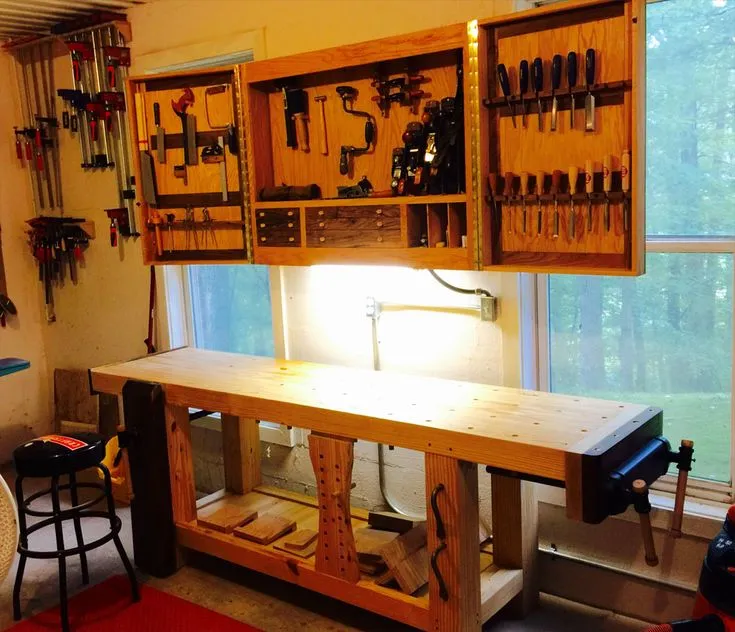
Photo: open beginner home toolbox with basic tools on workbench, via i.pinimg.com
Nobody tells you this before you buy a house: the first year is basically a paid apprenticeship in small repairs. A loose cabinet hinge in March. A running toilet in June. A picture you desperately want hung in September. And every single time, you'll face the same question — do I own the tool for this?
Here's the honest answer for most new homeowners: you need about twelve things. Not twelve hundred. The giant boxed kits at the store are mostly filler — forty screwdriver bits you'll never touch and a stud finder that finds nothing. Let's build the real kit instead.
The Core Twelve
- A mid-size adjustable wrench — handles nuts, bolts, and the plumbing under your sink. Buy a decent one; a sloppy jaw rounds off fittings.
- Cordless drill/driver — the single best tool purchase a homeowner makes. A budget brand around $60 is genuinely fine for year one.
- Tape measure (25 ft) — buy cheap, because you will leave it somewhere and buy another.
- Stud finder — yes, a real one this time. Hanging a TV without it is how drywall gets ruined.
- Assorted screwdriver set — Phillips #1 and #2, flathead, and a square drive. That covers nearly every screw in an American house.
- Utility knife — for opening boxes, trimming weatherstripping, scoring drywall. Keep spare blades.
- Pliers trio — needle-nose, slip-joint, and tongue-and-groove (Channellocks). Together they grip, twist, and squeeze anything you'll meet.
- Level, 24-inch — shelves, towel bars, picture frames. Your eye lies; the bubble doesn't.
- Hammer, 16 oz — the workhorse weight. Fiberglass handle, rubber grip.
- Allen key set — flat-pack furniture and countless fixtures run on hex bolts.
- Voltage tester pen — non-negotiable. Before you touch any outlet or switch, this $15 tool tells you the circuit is actually dead.
- A real flashlight or headlamp — half of home repair happens in a dark crawlspace at the worst possible hour.
Where to Cheap Out
Tape measures, utility knives, and hammers can be the store brand. They're simple tools with simple jobs, and losing a $25 tape measure stings a lot more than losing a $9 one.
Where Not To
The drill, the voltage tester, and the adjustable wrench are the three places quality pays. A drill with a dying battery or a wrench that slips mid-turn will make you resent the purchase — and resenting your tools is how projects die halfway.
What to Skip Entirely
- The 200-piece mega kit — you'll use 15 pieces and store the rest forever.
- Power saws — rent for the one or two projects that need them.
- Laser levels — a bubble level does the first-year job just fine.
- Specialty plumbing tools — if a job needs a pipe wrench and a basin wrench, it probably needs a plumber.
Upgrade Later, Not Now
Once you've done a year of repairs, you'll know exactly which tool frustrated you. Maybe the drill needs a second battery. Maybe you want a driver bit set. Let the house tell you what to buy next — that's how pros build their kits too, one annoying job at a time.
The goal of year one isn't a workshop. It's never having to pause a Saturday morning repair for a hardware run because you were missing something obvious. Twelve tools gets you there — with about $75 and a trunk that still has room for groceries.