Rust Never Sleeps: The Real Reason Galvanized Fasteners Are Worth Every Extra Penny
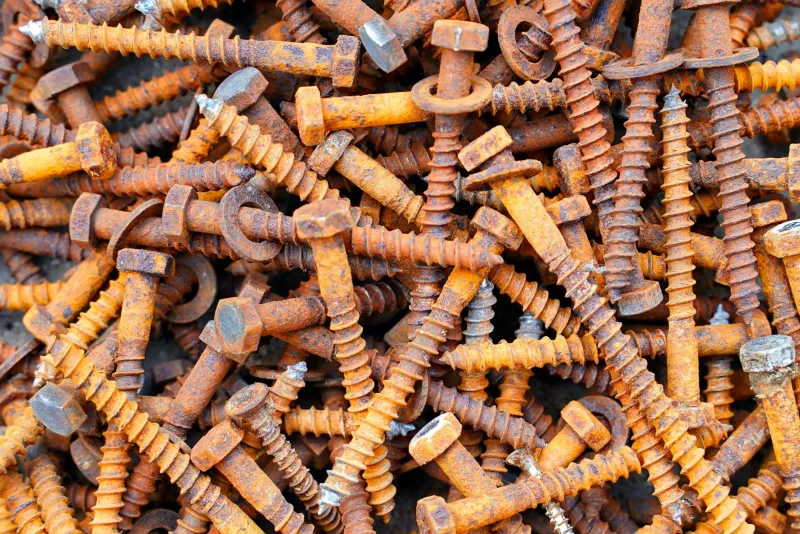
There's a particular kind of frustration that hits when a deck you built three years ago starts bleeding rust stains down freshly painted siding. Or when a fence post wobbles because the screws holding the bracket have corroded down to a flaky nub. The work looked solid at the time. The materials seemed fine. But somewhere in the fastener decision — probably at the point where you grabbed the cheaper box — the clock on your project's lifespan quietly started ticking.
Galvanization isn't a buzzword. It's a chemistry lesson with real financial consequences, and if you're building anything in the US that faces moisture, salt air, treated lumber, or just the general abuse of outdoor exposure, it's a lesson worth taking seriously.
What Galvanization Actually Does (and Why It's Not Just a Coating)
At its core, galvanization is the process of applying a layer of zinc to steel or iron. But the reason it works goes deeper than just slapping a protective shell on a screw. Zinc is what chemists call a sacrificial metal — it corrodes preferentially, meaning it oxidizes before the underlying steel gets a chance to. Even if the zinc layer gets scratched or chipped, it continues to protect the steel around the damaged area through a process called cathodic protection.
Think of it like a bodyguard that throws itself in front of the bullet. The zinc takes the hit so the steel doesn't have to.
This is fundamentally different from paint or a simple plating barrier, which fails the moment the surface is compromised. Once bare steel is exposed, rust sets in fast — especially in humid climates, coastal environments, or anywhere pressure-treated lumber is involved (more on that in a minute).
Hot-Dip vs. Electroplating: Not All Zinc Is Created Equal
Walk through any hardware aisle and you'll see fasteners labeled "galvanized" across a pretty wide price range. That's because there are two primary methods of applying zinc, and they are not interchangeable.
Hot-dip galvanization is exactly what it sounds like: the fastener is submerged in a bath of molten zinc at temperatures around 850°F. The result is a thick, metallurgically bonded coating — typically 1.4 to 3.9 mils thick — that becomes part of the fastener rather than just sitting on top of it. Hot-dip galvanized fasteners are the go-to for exterior structural applications, pressure-treated lumber, and anything that's going to face sustained moisture exposure.
Electroplating (also called electrogalvanizing) uses an electric current to deposit a much thinner zinc layer — usually under 0.5 mils. The finish is smoother and more uniform, which makes electroplated fasteners popular for interior applications and situations where appearance matters. But outdoors? That thin coat burns through quickly. In coastal markets like Florida, the Gulf Coast, or the Pacific Northwest, electroplated fasteners on exterior projects can start showing rust within a single rainy season.
For most professional contractors doing exterior work, hot-dip is the baseline. For high-corrosion environments — marine exposure, chemical-heavy industrial sites, or applications involving ACQ-treated lumber — stainless steel or specialized coatings like ceramic-polymer blends may be the right step up.
The Pressure-Treated Lumber Problem Most Builders Underestimate
Here's something that catches a lot of DIYers and even some contractors off guard: modern pressure-treated lumber is genuinely hard on fasteners. Since the industry shifted away from chromated copper arsenate (CCA) formulations in the early 2000s, the newer preservatives — primarily alkaline copper quaternary (ACQ) and copper azole — are significantly more corrosive to standard zinc coatings.
The copper compounds in ACQ-treated lumber can accelerate corrosion of fasteners by a factor of up to eight compared to untreated wood. That's not a rounding error — that's a fundamentally different material compatibility problem. For any deck, pergola, raised garden bed framing, or exterior structure using modern pressure-treated lumber, the International Residential Code in most US jurisdictions already recommends hot-dip galvanized fasteners at a minimum, with stainless steel as the preferred option in high-humidity regions.
Skipping this detail doesn't just risk cosmetic rust staining. It risks structural failure — loose joists, detached ledger boards, compromised post bases. The kind of failure that generates insurance claims and legal headaches.
Regional Climate Considerations Across the US
Not every build faces the same corrosion environment, and your fastener spec should reflect where you're actually building.
Coastal and Gulf regions (think Houston, Miami, the Carolinas, Southern California) deal with salt air, which dramatically accelerates zinc depletion. Hot-dip galvanized is the floor here, not the ceiling. Many contractors in these markets have moved to Type 316 stainless steel as their default for anything structural.
The Pacific Northwest brings relentless moisture — not salt, but sustained dampness that keeps fasteners wet for months at a time. Hot-dip performs well here, but coating thickness matters. Look for fasteners meeting ASTM A153 standards, which define minimum zinc coating weights for different fastener classes.
The Midwest and Mountain West deal with freeze-thaw cycles, which create micro-cracking in lesser coatings over time. The physical stress of expansion and contraction compounds the corrosion risk, especially in concrete-adjacent applications.
Dry climates like Arizona and Nevada are more forgiving, but irrigation systems, pool environments, and increasingly unpredictable weather patterns mean that even low-humidity regions shouldn't be treated as zero-risk.
The Math Nobody Wants to Do Until They Have To
Let's put some rough numbers on this. A box of 1-pound hot-dip galvanized structural screws might run you $4 to $8 more than the electroplated equivalent. On a mid-size deck build, you're probably looking at a total upcharge somewhere in the $30 to $80 range for the fasteners.
Now consider what it costs to remediate a deck with corroded fasteners three years later: full decking removal to access structural fasteners, replacement hardware, labor for reassembly, potential sistering of joists that suffered water damage around compromised connections, and resealing or staining the entire surface. Contractor labor alone in most US markets runs $75 to $150 per hour. A weekend's worth of remediation work easily clears $1,500 — and that's if the damage is caught before anything becomes a safety issue.
The math is uncomfortable in its simplicity. The upfront cost of corrosion-resistant fasteners is almost never the expensive choice over any meaningful time horizon.
Choosing Right the First Time
For most exterior residential work in the US, here's a practical starting framework:
- Interior, dry applications: Electroplated zinc is fine. Saves money where it makes sense.
- Exterior, non-structural, protected from direct moisture: Mechanically galvanized or electroplated with additional coating may work depending on climate.
- Exterior structural work, pressure-treated lumber, ground contact: Hot-dip galvanized, ASTM A153 compliant, minimum.
- Marine environments, pool areas, chemical exposure: Type 304 or 316 stainless steel. No shortcuts.
At Shree Ram Hardware, we stock across that full spectrum — because the right fastener for a bathroom renovation is genuinely different from the right fastener for a beachside pergola. The point isn't to upsell; it's to help you spec correctly so the work you're proud of today is still holding together a decade from now.
Rust doesn't send invoices. It just quietly does its work until you notice — and by then, the real bill has already been written.