Is Your Fastener Stock Quietly Sabotaging Your Work? Here's How to Find Out
Here's an uncomfortable truth nobody likes to say out loud at the supply counter: most working contractors — even the organized ones with labeled bins and tidy job boxes — are routinely reaching for the wrong fastener. Not because they're careless. Not because they skipped trade school. But because fastener selection is genuinely more nuanced than the industry gives it credit for, and the feedback loop on a bad choice can take months to show up as a callback.
By then, the job is long closed out. The invoice is paid. And you're eating the fix.
Let's talk about how to get ahead of that.
The "Close Enough" Problem
Every contractor develops a rhythm. You find a handful of fastener SKUs that seem to handle most situations, you stock them deep, and you stop thinking too hard about it. That efficiency is real — but it comes with a hidden cost.
The issue isn't that your fasteners are bad. It's that fasteners are application-specific in ways that aren't always obvious from the box. A screw that's perfect for attaching ledger boards to pressure-treated lumber can be completely wrong for the same lumber when it's in ground contact. A nail that holds beautifully in a dry interior wall starts corroding the moment it's exposed to coastal humidity. A bolt that handles shear loads like a champ might be undersized when the load shifts to tension.
When those mismatches happen, you don't always get a dramatic failure. Sometimes you get a subtle one — a deck board that starts cupping after two winters, a cabinet that slowly works itself loose, a fence panel that leans just enough to get a complaint call.
Those subtle failures are actually the dangerous ones, because they're easy to chalk up to "settling" or "material movement" when the real culprit is sitting in your nail gun.
What a Fastener Audit Actually Looks Like
A real audit isn't complicated. It's a structured way of asking: what am I using, and is it actually right for where it's going?
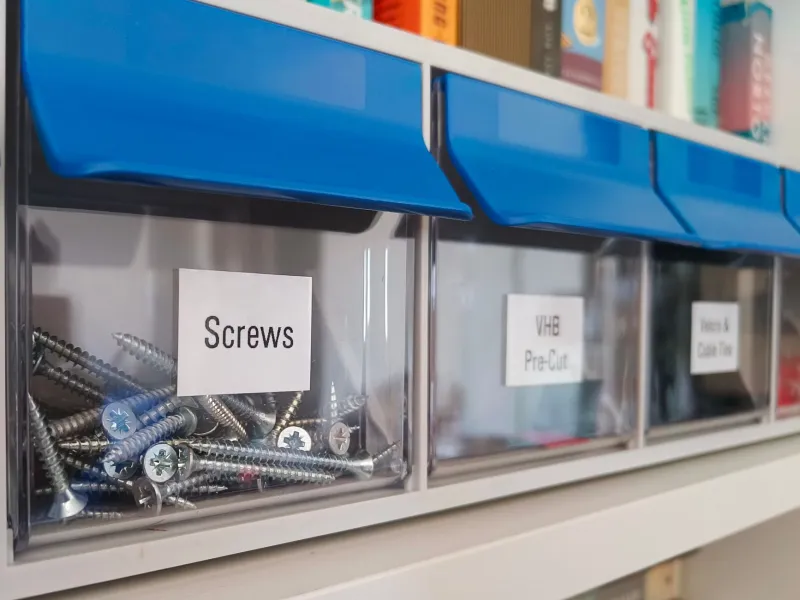
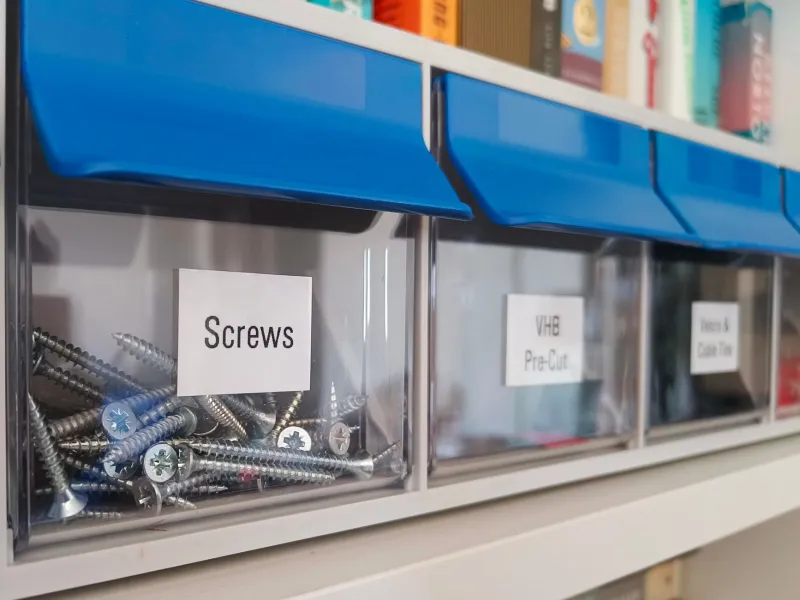
Start by pulling out everything in your current stock — coil nails, framing nails, deck screws, structural screws, lag bolts, anchor bolts, the whole pile. Group them by type and then ask yourself three questions about each group:
1. What coating or material is this? Galvanized, stainless, ceramic-coated, plain steel, hot-dipped versus electro-plated — these aren't interchangeable. Hot-dipped galvanized has significantly more zinc coverage than electro-plated, which matters enormously when you're fastening into ACQ or CA treated lumber. ACQ (alkaline copper quaternary) is corrosive to plain steel and thin-coat galvanized, which means using the wrong nail in treated lumber isn't just a code issue — it's a structural one. If you've got a bin of "galvanized" nails and you're not sure which kind, that's your first red flag.
2. What load direction is this fastener designed for? This is where a lot of contractors get tripped up without realizing it. Nails resist withdrawal (pull-out) poorly compared to screws, but they handle shear loads (lateral force) well. Screws are the opposite. That's why structural engineers specify nails for shear walls and screws or bolts for connections that see tension. Using deck screws as a substitute for structural screws in a joist hanger, for instance, is a mistake that shows up in failed inspections and, worse, in failed structures.
3. Is the size matched to the material thickness and the load requirement? A 1-5/8" screw in a 2x6 isn't doing much. A 3" screw driven through a ledger into a rim joist might be fine for a light deck but undersized for anything carrying serious live load. Fastener length and diameter need to match not just what "feels right" but what the application actually demands.
Real-World Examples of the Gap
Here's a scenario that plays out more than contractors like to admit: a framing crew uses standard bright common nails on a job where the lumber spec called for hot-dipped galvanized. The lumber is treated. The nails start corroding within the first year. By year three, the connection has degraded enough to fail an inspection during a renovation. The original contractor gets the call.
Or consider a DIY customer who uses drywall screws — those thin, brittle black screws — to attach a ledger board for a deck. Drywall screws have no shear rating. They're not designed for structural applications. One good lateral load event (a crowded party, a windstorm, a kid jumping off the railing) and that deck doesn't just fail — it fails suddenly.
These aren't edge cases. They're the predictable result of treating fasteners as generic commodities instead of engineered components.
Building a Smarter Stock
Once you've done the audit, the goal isn't to overhaul everything at once — it's to close the gaps methodically.
Start by identifying your most common applications: interior framing, exterior decking, ledger connections, concrete anchoring, roofing, whatever makes up the bulk of your work. For each one, look up the actual fastener specification — either from the code (IBC, IRC), the manufacturer's installation guide, or a structural engineer's recommendation if you're doing anything load-bearing.
Then compare that spec to what you're currently stocking. In most cases, you'll find a handful of substitutions worth making. Maybe you swap out your electro-plated nails for hot-dipped on all exterior work. Maybe you add a structural screw to your kit for ledger and joist hanger work. Maybe you realize your anchor bolt selection has been undersized for the concrete thickness you're typically working with.
Small adjustments. Real impact.
The Audit Pays for Itself
Here's the math that makes this worth your time: a single callback on a deck or framing job can run anywhere from a few hundred to several thousand dollars by the time you factor in labor, materials, and the relationship damage with the customer. The fastener upgrade that would have prevented it? Usually pennies per connection.
The contractors who build reputations that last — the ones who get referrals without asking, who don't dread their phone ringing six months after a job closes — aren't necessarily using fancier tools or better lumber. They've just closed the gap between what they're using and what the application actually needs.
A fastener audit is one of the cheapest, fastest ways to get there.
And if you're not sure where to start, bring your project specs into Shree Ram Hardware. We stock a full range of fasteners across coating types, load ratings, and applications — and we're happy to help you figure out what's actually right for the job, not just what's closest to what you've always grabbed.