When Cheap Measuring Tools Turn a $200 Job Into a $5,000 Nightmare
There's a story every experienced contractor has heard — or lived. A remodel goes sideways. Cabinets don't align. A tile floor ends up with a visible slope. Framing is off by just enough to make drywall installation a nightmare. And when you trace it all the way back to the source, the culprit isn't inexperience or rushing. It's a $12 tape measure that was off by a quarter inch.
That's not a small error. On a kitchen renovation, a quarter-inch discrepancy can cascade through countertops, backsplash cuts, appliance gaps, and cabinetry reveals — turning a clean install into a visible mess that no amount of caulk can fully hide. The cost to fix it? Easily several thousand dollars in labor, materials, and client goodwill.
Precision isn't just a professional virtue. It's a financial safeguard.
The Measurement Error Nobody Talks About
Most contractors obsess over skill — and rightly so. But skill operates within the data you give it. If your inputs are wrong, even flawless execution produces the wrong result. Measurement tools are the data source for every cut, every pour, every layout decision made on a jobsite.
Here's the uncomfortable truth: cheap tape measures drift. Levels lose their bubble calibration. Digital calipers develop battery-related reading errors. Laser distance meters from bargain bins can be off by fractions that add up fast across large spans. None of this is immediately obvious. You don't know the tool is lying to you until the project is already built wrong.
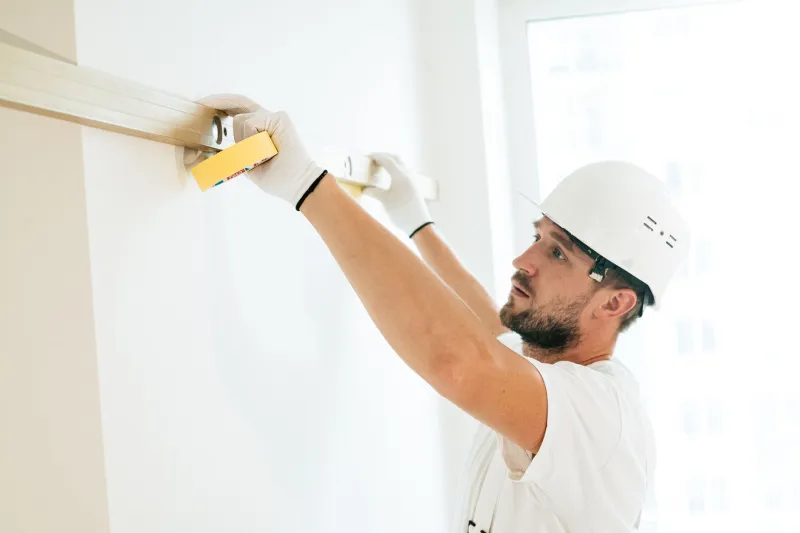
A contractor in the Chicago area shared a story about a bathroom tile job where a $9 level — slightly bent from being tossed in a truck bed — gave him a false read throughout a full day of installation. The floor looked fine until grout dried and the light hit it from a window. The slope was undeniable. The client was furious. Ripping out and redoing the tile, including materials, cost over $3,800. The "savings" on that level cost roughly 400 times its purchase price.
What Calibration Actually Means for Your Bottom Line
Calibration isn't just a word for lab technicians. It matters on every jobsite, every day. A level that reads true when new can become unreliable after repeated drops, temperature swings, or rough transport. Digital gauges need periodic zeroing. Tape measures with worn end hooks — the small metal tab at the tip — can introduce consistent errors on every single measurement.
The end hook issue alone is worth understanding. That tab is designed to float slightly, accounting for whether you're hooking it over an edge or butting it against a surface. When it bends or wears, it stops compensating correctly. You might be off by 1/16 of an inch every single time you measure. On a 20-foot wall with 12 stud placements, that's a cumulative error that throws off electrical rough-in, insulation bays, and drywall seams all at once.
Regular tool checks aren't paranoia — they're maintenance. Just like you wouldn't skip an oil change on a work truck, you shouldn't skip verifying that your measurement tools are reading accurately.
The Right Tools Aren't Expensive — They're Investments
There's a common misconception that professional-grade measuring equipment is a luxury reserved for large commercial operations. In reality, the price gap between a decent tool and a great one is often surprisingly small — and the return on that investment is enormous.
Consider a quality tape measure from a reputable brand versus a bargain-bin version. The difference might be $15 to $25. But the reliable one features a sturdier end hook, a blade that resists kinking, and accurate graduations that stay legible. On a single mid-size renovation, that accuracy difference can save hours of rework and keep your materials budget intact.
Digital levels have come down dramatically in price over the last decade. A solid digital angle finder that gives you precise degree readings — not just a bubble approximation — runs anywhere from $30 to $80. For roofing pitches, stair stringers, or any work requiring consistent angles, that device pays for itself the first time it prevents a miscut.
Laser distance meters are another game-changer. Measuring a large room solo with a traditional tape introduces human error at every step — someone has to hold one end, the tape can sag, and reading the number while stretched across a room is awkward. A quality laser meter gives you accurate readings in seconds, alone, with no sag and no squinting. For estimating and layout work, the time savings alone justify the cost.
What Good Measurement Habits Look Like in Practice
Beyond tool quality, habits matter. Experienced contractors develop routines that catch errors before they become problems.
Measure twice, but also measure differently. If you're measuring a span with a tape, verify it with a laser. If your level says plumb, double-check with a digital angle finder. Cross-referencing tools catches the rare but costly moment when one instrument is off.
Store tools properly. Levels shouldn't ride loose in a truck bed where they can warp or bend. Tapes should be retracted and stored where the blade won't kink. Digital tools need battery checks — a low battery can cause erratic readings without triggering an obvious error indicator.
Replace worn tools without guilt. A tape measure with a bent hook or a faded blade isn't a tool anymore — it's a liability. The cost of replacement is trivial compared to the cost of a single measurement error on a real project.
Invest in a calibration reference. A precision machinist's square or a known-accurate reference level gives you something to check your field tools against periodically. It takes five minutes and can save you from working with a compromised instrument without knowing it.
Accuracy as a Business Differentiator
Here's the angle most contractors don't think about: measurement precision is a competitive advantage. Clients notice when work fits perfectly. When reveals are consistent, when floors are truly level, when tile grout lines are perfectly uniform — that's the kind of quality that generates referrals and repeat business.
Conversely, visible errors — even minor ones — erode trust fast. A homeowner who sees a crooked cabinet or a sloping countertop isn't thinking about your skill level or your years of experience. They're thinking about whether you're the right person for their next project.
Building a reputation for precision means investing in the tools that make precision possible. It's not glamorous. Nobody posts an Instagram reel about their tape measure. But the contractors who consistently deliver tight, accurate work tend to be the ones who take their measurement tools as seriously as their power tools.
The Bottom Line
Your skill level matters. Your experience matters. But both of those assets are only as good as the data you feed them. Measurement tools are the foundation of every decision made on a jobsite — and when that foundation is shaky, everything built on top of it is at risk.
At Shree Ram Hardware, we stock measurement tools across every category and price point, from reliable everyday tape measures to professional-grade laser meters and digital levels built for demanding jobsite conditions. If you're not sure what your toolkit is missing, come talk to us. We'd rather help you spend $50 on the right tool today than watch you spend $5,000 fixing a mistake next month.
Build better. It starts with knowing exactly where you stand.