What's Hiding in Your Supply Closet Is Quietly Draining Your Budget
The Mess You've Been Ignoring Has a Price Tag
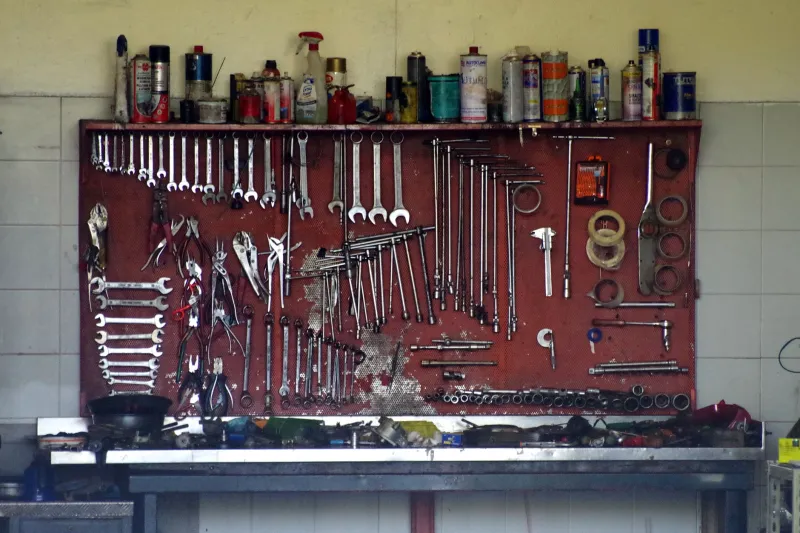
Most contractors and serious DIYers have the same dirty secret: a storage area that started organized and slowly turned into a graveyard of half-empty boxes, unlabeled bags, and fasteners that might be the right size — or might not. You tell yourself you'll sort it out eventually. Meanwhile, you're buying duplicates at the hardware store because you can't find what you already own, and you're losing time mid-project hunting through bins that look like a yard sale aftermath.
This isn't just a tidiness problem. It's a cash flow problem. And once you start adding up what disorganized supply storage actually costs — in wasted purchases, project delays, and materials that have degraded past the point of usefulness — the number gets uncomfortable fast.
A fastener audit isn't glamorous work. But it's one of the highest-return things you can do for your shop or jobsite this season.
Why Fastener Chaos Costs More Than You Realize
Let's talk specifics. The average contractor makes between two and four unplanned supply runs per week. A significant chunk of those trips exist because someone couldn't locate something that was already on-site. Factor in drive time, fuel, and the near-universal tendency to grab a few extra things while you're there, and those "quick runs" can easily run $50 to $150 a pop.
Then there's the redundancy problem. When supplies aren't organized by type and size, people buy what they think they need rather than what they actually have. End result: four boxes of 1-5/8" drywall screws when you only needed one, and zero of the 3" structural screws that were actually on the list.
And don't overlook degradation. Fasteners aren't immune to time and environment. Zinc-coated screws stored in humid conditions can develop surface rust that compromises their holding strength. Adhesive anchors have shelf lives. Certain specialty fasteners — particularly those with nylon or rubber components — can become brittle or lose their rated performance after years in a hot storage space. Using degraded fasteners isn't just wasteful, it can be a genuine liability on a job.
Step One: Pull Everything Out
I know. It sounds like a weekend project you don't have time for. But you can't audit what you can't see, and trying to reorganize around the mess just means reorganizing the mess.
Pull every fastener, anchor, connector, and piece of hardware out of storage and onto a flat surface. Use a tarp on the floor if you need the real estate. Group things loosely as you go — screws with screws, bolts with bolts, anchors together, specialty hardware in its own pile. Don't worry about precision yet. You're just getting visibility.
While you're pulling things out, start a discard bin. Anything visibly corroded beyond surface rust, anything unlabeled that you genuinely cannot identify, and anything in quantities so small they're not worth keeping (two loose lag bolts from 2018 are not an asset) — toss them or set them aside for recycling.
Step Two: Sort by Actual Use Case, Not Just Type
Here's where most people go wrong with reorganization: they sort by what something is rather than what it's for. You end up with a giant bin of miscellaneous screws that's technically organized but still useless in practice.
Instead, think about how you actually work. If you do a lot of framing, your structural fasteners should be grouped together by length and shear rating. If drywall finishing is a regular part of your work, coarse-thread versus fine-thread drywall screws should be clearly separated. Deck screws should live near your exterior hardware, not mixed in with interior trim fasteners.
For DIYers, the categories might be simpler: general wood screws, drywall, masonry, sheet metal, and a "specialty" section for anchors, toggle bolts, and anything project-specific. The goal is that when you're mid-project and need a #10 x 2" wood screw, you can put your hand on it in under thirty seconds.
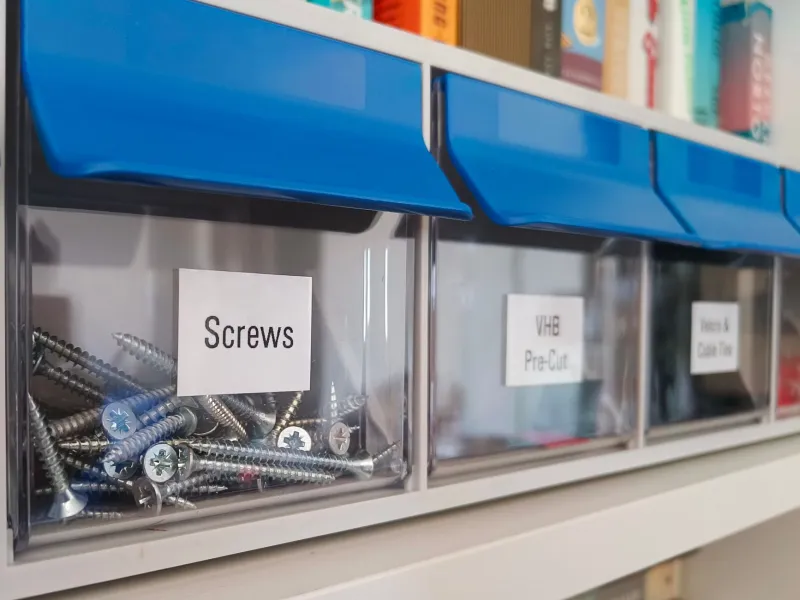
Label everything. Seriously. A label maker is one of the best investments in this process. "Screws" is not a label. "Wood Screw #8 x 1-1/4" Coarse" is a label.
Step Three: Evaluate What You Actually Have
Now that things are sorted, you can make real decisions. For each category, ask three questions:
Do I use this regularly? If a specialty fastener hasn't been touched in two years, it probably doesn't need to take up prime real estate in your storage. Move it to a secondary bin or sell it.
Is this still in usable condition? Check for corrosion, brittleness, and — for adhesive or chemical anchors — expiration dates. When in doubt, test a sample before committing them to a structural application.
Do I have the right quantity? Too much inventory ties up money and space. Too little means emergency runs. For your highest-use fasteners, figure out a realistic par level — the minimum quantity you want on hand before reordering — and commit to it.
Step Four: Make Strategic Replacement Decisions
Once you know what you have and what condition it's in, you can shop smart instead of reactive. Rather than grabbing whatever's on the shelf when you're already running late, you're replenishing specific items at specific quantities.
This is also a good moment to evaluate quality. If you've been buying the cheapest available screws and constantly dealing with stripped heads, cam-outs, or snapped shanks mid-drive, the audit is your opportunity to upgrade. Better fasteners cost more per unit but cost less per project when you factor in the time you lose fighting bad hardware.
For contractors, consider whether your current supplier relationships are actually serving you. Are you getting consistent quality? Reliable availability? Knowledgeable staff who can help you spec the right fastener for an unusual application? Independent hardware suppliers often outperform big-box chains on all three counts — and they're more likely to actually know what a structural hex head lag looks like versus a decorative one.
What You Get on the Other Side
A completed fastener audit typically yields a few immediate wins: a cleaner workspace, a shorter list of things to reorder, and the satisfaction of actually knowing what you own. But the longer-term payoff is the one that matters.
When your supplies are organized, you stop buying duplicates. You stop making emergency runs for things you already have somewhere. You stop using questionable fasteners because they were the only thing you could find in a pinch. Your projects run faster, your costs come down, and your finished work is more consistent.
It's not the most exciting afternoon you'll spend in your shop. But it might be the most profitable one.
At Shree Ram Hardware, we believe the details are where quality lives — whether that's in the materials you choose, the tools you use, or the systems you build around your work. A well-stocked, well-organized supply space isn't a luxury. It's part of building better.