What's Actually Inside Your Hammer: The Material Science That Decides Whether It Lasts 10 Years or 10 Days
Let's be honest — most of us have bought a cheap tool at least once, convinced ourselves it would hold up just fine, and then watched it crack, strip, or snap at the worst possible moment. Maybe it was a $12 wrench that rounded off a bolt on a Sunday afternoon. Maybe it was a drill bit set that dulled after one sheet of plywood. Whatever it was, you learned the hard way that price isn't just about brand prestige.
But here's the flip side: not every expensive tool earns its price tag either. There's a lot of marketing noise out there — sleek packaging, influencer endorsements, and suspiciously vague claims about "professional-grade" construction. So how do you actually separate the tools worth splurging on from the ones where a mid-range option works just as well?
The answer lives in material science. Specifically, in the alloys, heat treatments, and manufacturing processes that determine how a tool behaves under real stress — not just in a catalog photo.
Why Steel Isn't Just Steel
When you pick up two hammers and one costs $28 and another costs $180, you might assume you're mostly paying for a logo. Sometimes that's partially true. But more often, the difference comes down to what's actually in the steel.
Budget tools frequently use lower-carbon steel alloys — they're cheaper to produce, easier to machine, and totally fine for light, occasional use. The problem is that low-carbon steel deforms under repeated stress. It doesn't shatter dramatically; it just slowly loses its shape. A hammer face mushrooms slightly. A wrench jaw spreads a fraction of a millimeter. These tiny deformations compound over time until the tool becomes unreliable.
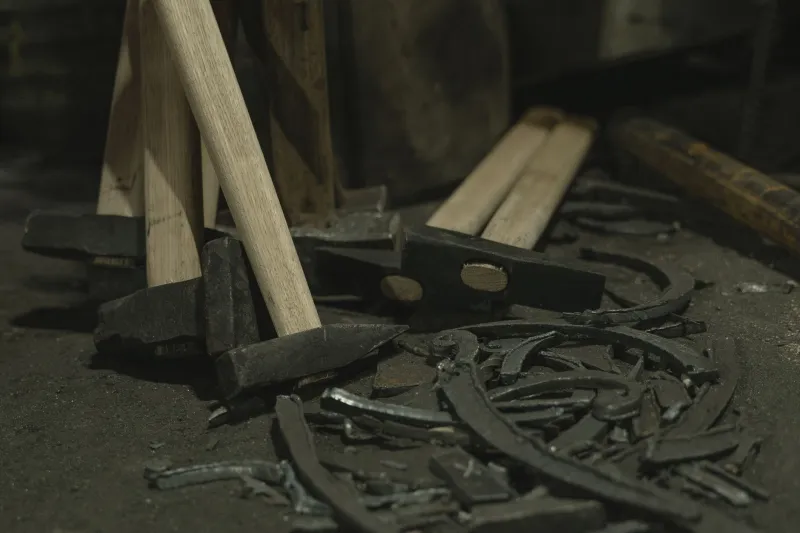
Premium tools — the ones that actually justify the price — typically use drop-forged, high-carbon or chromium-vanadium steel. Drop forging aligns the grain structure of the metal, making it significantly stronger than cast alternatives. Chromium-vanadium alloys add hardness and corrosion resistance without making the steel brittle. That combination is why a quality Estwing or Stiletto hammer can absorb tens of thousands of strikes and still feel solid, while a budget version from an unknown brand starts feeling soft and off-balance after a few months of regular use.
Heat Treatment: The Step That Changes Everything
Here's where a lot of mid-range tools fall short even when they're made from decent steel: heat treatment. The process of heating and cooling metal in controlled ways — called tempering and quenching — dramatically changes how that steel performs.
Properly heat-treated steel achieves a balance between hardness and toughness. Too hard and the tool becomes brittle, prone to chipping or snapping under impact. Too soft and it wears down quickly. Getting that balance right requires precise temperature control and consistency, which costs money in manufacturing.
Cheaper tools often skip thorough heat treatment or apply it inconsistently. You might not notice right away. But six months into a kitchen remodel or a deck build, you'll start noticing that your screwdriver tips are chewing up screw heads, or that your chisel edge rolls instead of cutting cleanly. That's heat treatment failure showing up in real time.
The Cost-Per-Use Calculation Nobody Does But Everyone Should
Here's a framework that changes how you think about tool purchases: forget the sticker price and calculate cost per use.
A $30 budget hammer that lasts two years of moderate DIY use might see around 500 serious work sessions before it starts failing. That's $0.06 per use — sounds great until you realize a $150 premium hammer used for the same frequency could realistically last 15 to 20 years. Suddenly that "expensive" hammer is costing you fractions of a cent per swing.
This math gets even more compelling for professionals. A contractor swinging a framing hammer eight hours a day, five days a week doesn't have the luxury of a tool slowly degrading. When a tool fails mid-project, it costs time, client trust, and potentially rework. The premium tool isn't a luxury at that point — it's just basic operational sense.
That said, cost-per-use analysis also reveals where premium tools don't make sense. A one-time-use specialty bit for a single project? Buy the affordable version. A level you'll use twice a year on small hanging jobs? Mid-range is plenty. The question is always about how often and how hard the tool will actually work.
Categories Where Material Quality Actually Matters
Not every tool category benefits equally from premium materials. Here's a rough breakdown based on where the engineering differences show up most clearly:
High-impact tools (hammers, mallets, chisels): This is where metallurgy matters most. Drop-forged, heat-treated steel is worth every penny here. These tools take brutal, repetitive stress and the quality difference is immediately measurable.
Cutting tools (drill bits, saw blades, router bits): Coating and edge geometry matter as much as the base material. High-speed steel (HSS) is the baseline; cobalt or carbide-tipped options stay sharp dramatically longer. For frequent users, carbide isn't optional — it's just efficient.
Wrenches and sockets: Chrome-vanadium is the standard for good reason. The difference between a quality socket set and a bargain one shows up the first time you torque something hard and the socket rounds off instead of holding. This is a category where cheap tools don't just underperform — they can actively damage fasteners.
Hand planes and layout tools: Precision and flatness of machined surfaces matter enormously. A $20 combination square that's slightly off will cause cumulative errors across an entire project. Layout tools are one area where accuracy is a material quality issue, not just a preference.
Tape measures and levels: Honestly? Mid-range wins here for most users. The core function doesn't require exotic materials, and the durability differences between tiers are less dramatic.
When Brand Names Are Worth It — and When They're Not
Brand reputation does carry some real information. Companies like Estwing, Klein, Knipex, and Wera have built their reputations on consistent manufacturing standards and quality control. When you buy from them, you're partly paying for the reliability of knowing the alloy and heat treatment will actually be what they claim.
But brand prestige alone isn't a guarantee. Some well-known names have quietly shifted manufacturing overseas and cut corners on materials while keeping prices high. Meanwhile, some lesser-known brands — especially those targeting professional tradespeople in specific niches — offer exceptional material quality at honest prices.
The smartest move is to look past the brand and ask: what alloy, what manufacturing method, what warranty? If a company can't or won't answer those questions clearly, that tells you something.
Building a Smarter Tool Kit
At Shree Ram Hardware, we've seen every kind of builder walk through the door — weekend warriors tackling their first deck, seasoned contractors who've been swinging hammers for thirty years, and everyone in between. The one thing they all have in common when they buy smart is this: they stop thinking about tools as expenses and start thinking about them as infrastructure.
Your tools are the foundation of everything you build. Invest in the ones that take repeated abuse — the hammers, chisels, wrenches, and cutting tools that work hard every single time. Be more flexible with the specialty items you'll only reach for occasionally. And always, always ask what's actually inside the tool before you decide what it's worth.
Because at the end of the day, you're not paying for a logo. You're paying for the alloy composition, the heat treatment curve, and the manufacturing precision that determines whether your tool is still sharp and solid ten years from now — or quietly sitting in a landfill after two.