Not All Nails Are Created Equal: What Your Contractor Knows That You Don't
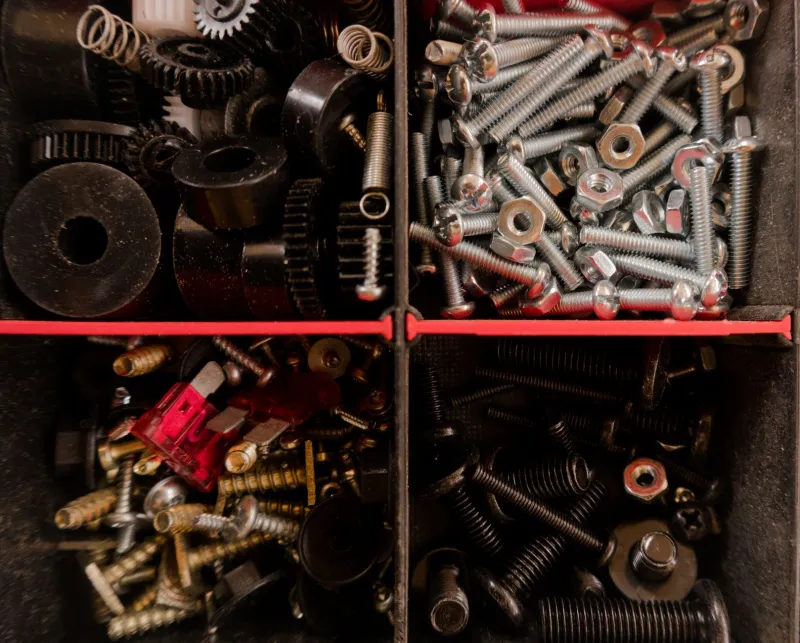
Here's something most homeowners don't realize until it's too late: the nails holding your deck together, your framing in place, and your trim looking sharp are not interchangeable. Not even close. A seasoned contractor walking into a supply store doesn't just grab the cheapest box of 16d nails and call it a day. They're reading specs, checking coatings, and thinking about load requirements — all before a single swing of the hammer.
So what exactly do they know that you don't? Let's break it down.
Why Nail Selection Is a Structural Decision, Not Just a Supply Run
When a professional contractor talks about nails, they're really talking about engineering. Every nail has a job to do, and the wrong nail in the wrong place creates a weak point in your structure that can show up as a callback six months later — or worse, a structural failure years down the line.
There are three core specs that matter most:
1. Nail type and geometry — Common nails, box nails, ring-shank nails, spiral-shank nails, finish nails, brad nails. Each one is shaped the way it is for a reason. Ring-shank nails, for example, have ridges along the shank that dramatically increase their holding power in wood. They're the go-to for decking and subflooring where pull-out resistance matters. Smooth-shank nails drive easier and are fine for framing, but they won't grip the same way under long-term load or seasonal wood movement.
2. Shear strength — This is the nail's ability to resist forces that push perpendicular to its length. Think about a joist hanger or a ledger board connection on a deck. Those nails are fighting gravity every single day. Using an undersized nail or the wrong gauge means you're asking the fastener to do more than it was designed to handle. Most residential framing calls for 10d or 16d common nails for good reason — they've been load-tested and code-verified.
3. Corrosion resistance — This is where a lot of DIY projects go wrong, and where the price difference between a budget box of nails and a professional-grade option really shows up.
The Corrosion Problem Nobody Talks About Until the Deck Starts Sagging
Since 2004, the building industry has largely moved away from CCA (chromated copper arsenate) treated lumber — the old green-tinted pressure-treated wood — toward newer ACQ (alkaline copper quaternary) and copper azole formulations. Here's the catch: these newer preservatives are significantly more corrosive to standard galvanized fasteners.
If you're building or repairing a deck, a fence, or any outdoor structure with modern pressure-treated lumber and you use standard electro-galvanized nails (the cheapest galvanized option), you're setting yourself up for accelerated corrosion. Within a few years, those nails can corrode enough to reduce their holding strength dramatically — and you won't see it happening until boards start pulling away or wobbling underfoot.
Professional contractors use hot-dipped galvanized nails or stainless steel fasteners for any exterior or pressure-treated application. Hot-dipped galvanization creates a thicker, more durable zinc coating than the electro-galvanized process. Stainless steel costs more but is essentially corrosion-proof, making it the standard choice for coastal environments where salt air accelerates the process even further.
When you're reading a box of nails at the hardware store, look for ASTM A153 or ASTM F1667 compliance markings. Those designations tell you the fastener has been tested to meet specific performance standards — not just slapped with a coating that looks shiny on the shelf.
Reading the Packaging: A Quick Field Guide
Fastener packaging can look like alphabet soup if you don't know what you're looking for. Here's a cheat sheet:
- Penny size (d) — This is the traditional length designation. 8d = 2.5 inches, 16d = 3.5 inches. It has nothing to do with diameter.
- Gauge — The wire diameter. Lower gauge numbers mean thicker nails. 10-gauge is beefier than 16-gauge.
- EG vs. HDG — Electro-galvanized vs. hot-dipped galvanized. For outdoor or treated lumber use, always go HDG.
- SS — Stainless steel. Worth the premium in wet or coastal environments.
- Ring or spiral shank — Indicated on the box. Choose these for high pull-out resistance applications like decking, subfloor, or roofing.
- Common vs. box — Common nails have a thicker shank and are stronger. Box nails are thinner (reduces splitting in dry lumber) but have less shear strength.
Where the $300 Difference Actually Comes From
Let's talk numbers. A box of standard smooth-shank electro-galvanized 16d nails might run you $15–$20. A comparable box of hot-dipped galvanized ring-shank nails for the same application could be $35–$50. Stainless steel fasteners push even higher.
On a full deck build or a framing project, that difference across multiple boxes of nails and structural screws can add up to a few hundred dollars in materials. That's the number that makes some DIYers hesitate and reach for the cheaper option.
But here's what that math doesn't account for: the cost of going back. A deck that needs to be partially torn apart and re-fastened five years later — because the original nails corroded through — isn't just a materials cost. It's labor, it's disruption, and in some cases it's a homeowner's insurance headache if the failure causes injury or property damage. Some insurance policies can get complicated when structural failures are traced back to code-non-compliant materials.
Professional contractors aren't paying more for fancy nails because they like spending money. They're protecting their reputation, avoiding callbacks, and building things that pass inspection the first time.
Matching the Nail to the Job: A Practical Breakdown
- Framing — 16d common nails, smooth shank, hot-dipped galvanized if any exposure is possible
- Decking and exterior structures — Ring-shank HDG or stainless steel, sized to your lumber thickness
- Roofing — Roofing nails with large heads and appropriate shank length for your shingle type; galvanized or stainless for longevity
- Subfloor — Ring-shank nails to minimize squeaking and pull-out over time
- Interior trim and finish work — Finish nails or brad nails (15- or 18-gauge), no corrosion coating needed, sized to material thickness
- Joist hangers and hardware — Always use the specific nails specified by the hardware manufacturer; using the wrong nail voids the load rating
That last point is worth emphasizing. When you're using structural connectors like joist hangers, post bases, or hurricane ties, the manufacturer's load rating is only valid when you use the nail type and size they specify. Substituting a similar-looking nail can reduce the rated capacity of the connector significantly — and that's the kind of thing that shows up on a home inspection or in a warranty dispute.
Build It Right the First Time
At Shree Ram Hardware, we carry a full range of fasteners — from budget-friendly interior finish nails to professional-grade stainless and hot-dipped galvanized options for the toughest outdoor applications. Our team can help you match the right fastener to your specific project, whether you're a weekend DIYer building a backyard deck or a contractor stocking up for a full framing job.
The nail is the smallest thing on your project. It's also one of the most important decisions you'll make. Don't leave it to chance — or to whatever's cheapest on the shelf.