Stop Replacing What Should Last a Lifetime: The Case for Better Fasteners
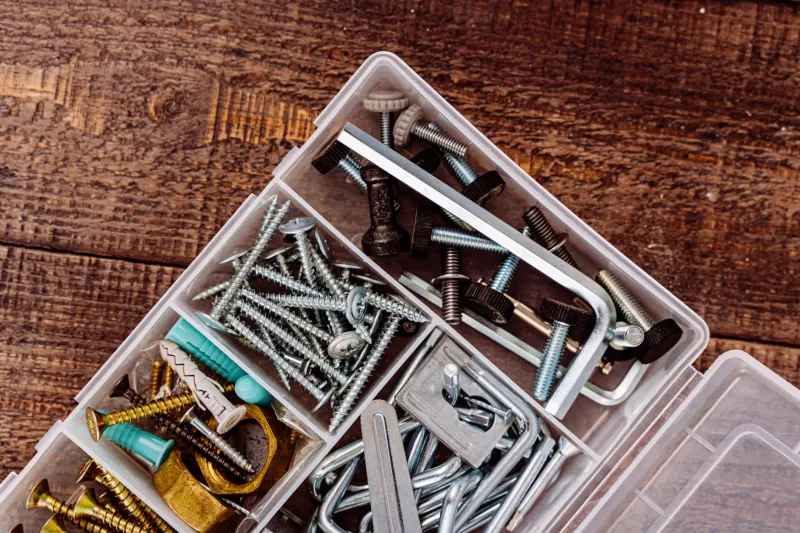
Walk down the fastener aisle at any big-box store and you'll find hundreds of options. Bins of bright zinc screws. Blister packs of assorted bolts. Little bags of drywall anchors that cost less than a cup of coffee. It all looks fine. It all seems fine — until six months later, when a cabinet hinge starts wiggling, a deck board lifts at the corner, or a gate hinge rusts through after a single rainy season.
This is the quiet cost of cheap hardware. It doesn't announce itself dramatically. It just slowly, steadily, makes everything worse.
At Shree Ram Hardware, we think about fasteners differently. That perspective comes, in part, from a construction philosophy deeply rooted in South Asian building tradition — one that treats every nail, every bolt, and every bracket as a long-term investment rather than a throwaway component.
The 'Build Once' Philosophy Explained
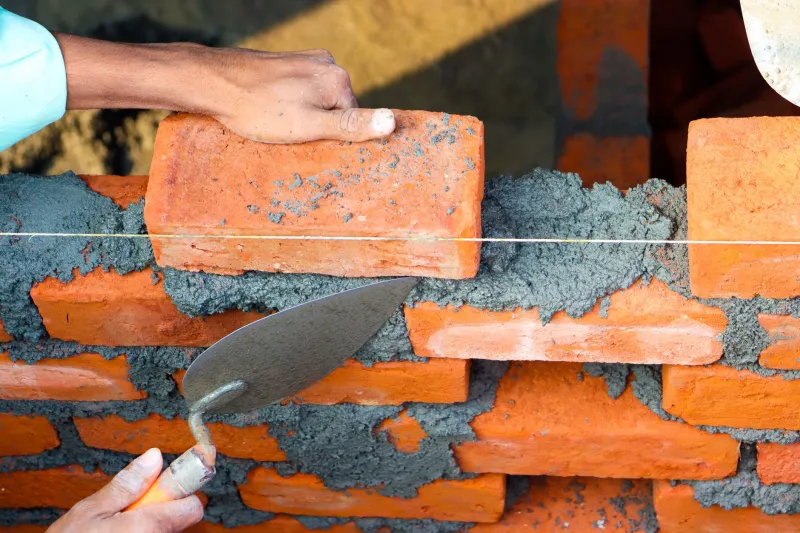
In India, construction has historically operated under a very different set of pressures than American residential building. Labor is more intensive, materials travel longer distances, and the expectation is that a structure — once built — should serve multiple generations without significant rework. That mindset shapes everything, including how builders think about the smallest components.
Fasteners aren't an afterthought in that world. They're chosen with the same care as structural lumber or roofing material. Grade matters. Coating matters. Thread count, shank diameter, and tensile strength all matter. A carpenter or contractor trained in that tradition doesn't reach for whatever's cheapest. They reach for whatever will still be holding strong in 30 years.
That's the 'build once, build right' philosophy, and it's something American DIYers and professionals alike are starting to rediscover.
What Exactly Makes a Fastener 'Better'?
Let's get specific, because this is where a lot of people get lost.
Material grade is your starting point. Standard hardware store screws are often made from low-carbon steel with a basic zinc coating. That works fine for interior trim in a climate-controlled room. The moment you're dealing with outdoor exposure, pressure-treated lumber, or high-moisture environments — think bathrooms, basements, decks — that coating starts failing fast. You want stainless steel (305 or 316 grade for coastal areas), hot-dipped galvanized, or ceramic-coated fasteners rated for the specific application.
Thread design is another factor that gets overlooked. Coarse-thread screws bite into softwood and drywall efficiently. Fine-thread screws are better for hardwood and metal connections. Using the wrong thread pattern doesn't just make installation harder — it reduces the holding power of the joint by a significant margin over time.
Head type and drive system matter more than people realize too. Phillips-head screws are ubiquitous in the US, but they're also notorious for cam-out — that frustrating spinning-out that strips the head and leaves you fighting to extract a half-driven fastener. Torx (star-drive) and square-drive heads offer dramatically better contact, reduce stripping, and are standard in higher-grade construction hardware. Once you've driven a structural Torx screw, going back feels like a step backward.
The Real Cost of Cheap Hardware
Here's a number worth sitting with: according to multiple home improvement surveys, hardware failure — stripped screws, corroded hinges, failed anchors — is among the top three reasons homeowners call in a contractor for what should have been a simple repair. That's not a material failure. That's a specification failure. Someone chose the wrong fastener for the job.
Consider a basic deck build. A homeowner uses standard zinc-coated screws because they're cheap and familiar. In a wet climate, those screws begin corroding within a couple of seasons. The corrosion stains the deck boards. The heads start to weep rust. By year five, some boards are loose because the screw shank has thinned enough to lose grip. A full redeck costs thousands.
The same project done with hot-dipped galvanized or stainless structural screws — which might cost 30–40% more upfront — lasts 20-plus years without intervention. The math isn't even close.
Joints and Connections: Where Quality Really Shows
Fasteners don't exist in isolation. They're part of a joint — and the joint is where structural integrity either holds or fails. Traditional Indian masonry and carpentry both place enormous emphasis on joint quality. Dovetail connections, mortise-and-tenon joinery, and interlocking brick patterns all reflect a philosophy that the connection point should be the strongest part of the assembly, not the weakest.
American construction has drifted toward speed-optimized assembly, which often means relying on fastener volume to compensate for joint design. More screws, more nails, more clips — but not necessarily better connections. A well-designed joint with properly specified hardware almost always outperforms a slapped-together connection with twice the fasteners.
For DIYers, this is actually good news. You don't need to use more hardware — you need to use better hardware in the right places. Structural screws at load-bearing points. Proper lag bolts with washers for ledger connections. Rated joist hangers with the full specified fastener count (not half). These choices cost a little more and take a little more thought, but they're the difference between a deck that bounces and one that feels like it was poured from concrete.
Making the Switch: Where to Start
You don't need to overhaul your entire approach overnight. Start with the projects where fastener quality has the highest impact:
- Outdoor and exposed applications — decks, fences, pergolas, garden structures. Upgrade to hot-dipped galvanized or stainless.
- Structural connections — ledger boards, beam-to-post connections, stair stringers. Use rated structural screws or bolts, not standard wood screws.
- High-traffic hardware — door hinges, cabinet hardware, drawer slides. Invest in solid brass or stainless steel. The difference in feel and longevity is immediate.
- Anchoring into masonry — use proper wedge anchors or sleeve anchors, not plastic expansion plugs, for anything load-bearing.
At Shree Ram Hardware, we stock fasteners and hardware across the full quality spectrum — because we believe you deserve to know the difference, not just grab whatever's on the shelf. Our team can walk you through the right spec for your project, whether you're hanging a picture or building a carport.
The best hardware is the hardware you never have to think about again. That's not a luxury — it's just the smarter way to build.