When Yesterday's Shortcuts Come Back to Haunt You: The Hidden Cost of Aging Fasteners
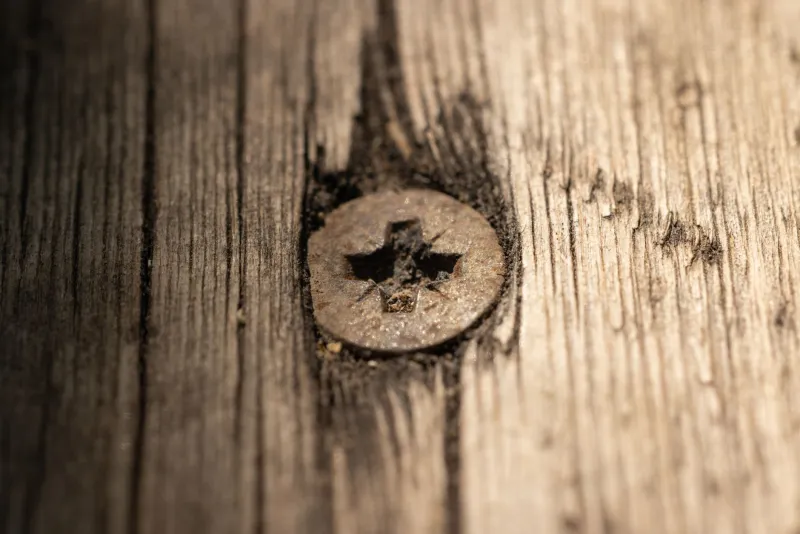
There's a particular kind of dread that hits when you press your hand against a deck railing and feel it shift. Not a lot — just enough. Enough to make you wonder how long it's been doing that, and what exactly is holding the whole thing together at this point.
More often than not, the answer is: not much.
Fasteners are the unsung infrastructure of every structure you've ever built or lived in. And when they go bad — slowly, invisibly, over years — they don't send a warning memo. They just quietly let go, one corroded thread at a time, until something expensive gives way.
The Slow Failure Nobody Talks About
Here's the thing about fastener failure: it almost never happens all at once. It's gradual. A screw loses its grip on wet wood. A nail develops surface rust that creeps inward. A bolt that was slightly undersized for the load it carries starts to fatigue. None of these feel urgent. None of them look like emergencies — until they are.
The insidious part is that most homeowners don't think about fasteners after a project is done. You built the fence, it looks solid, you move on. But wood expands and contracts with the seasons. Moisture finds its way into the smallest gaps. Temperature swings stress metal in ways that aren't visible to the naked eye. The fasteners holding your structure together are working constantly, even when you're not watching.
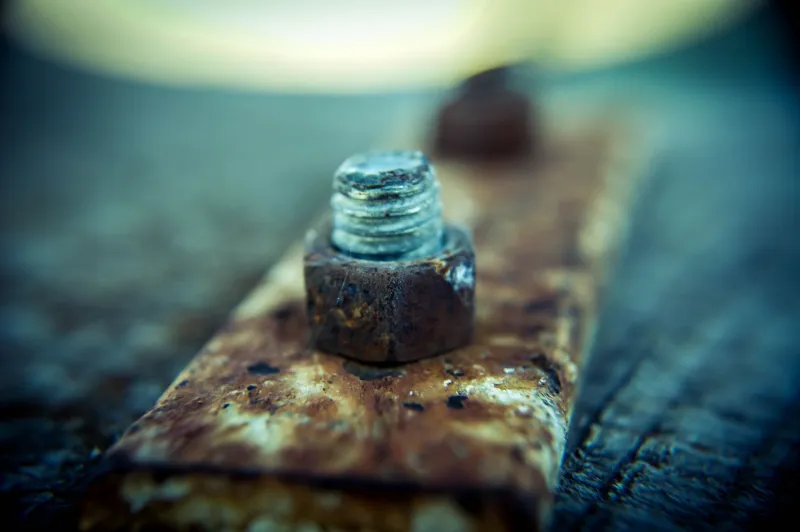
Galvanic corrosion is one of the biggest culprits. When two dissimilar metals make contact in the presence of moisture — say, a zinc-coated nail driven into pressure-treated lumber that contains copper-based preservatives — you get a slow electrochemical reaction that eats away at the fastener from the outside in. This is exactly why using the wrong type of nail in treated lumber is such a common and costly mistake.
Three Real Scenarios Where Cheap Fasteners Got Expensive
The Deck That Looked Fine Until It Wasn't
A homeowner in suburban Ohio built a second-story deck about seven years ago. He used standard bright common nails because they were cheaper than hot-dipped galvanized, and the deck looked great on day one. By year four, the ledger board connection — the critical joint where the deck meets the house — had started to corrode from the inside. The nails were degrading, pulling slightly away from the rim joist. By year seven, a structural engineer found that the ledger connection had lost roughly 60 percent of its holding strength. Total repair bill: just under $4,200, including partial deck demolition and ledger replacement. The nails he saved money on? Maybe $18 cheaper than the right ones.
The Fence That Became a Projectile Risk
In a neighborhood outside Atlanta, a wooden privacy fence installed during a home sale prep looked sturdy enough to pass inspection. The contractor used drywall screws — yes, drywall screws — to attach the fence boards to the rails, apparently because they were on hand. Drywall screws are brittle and have no business being used in exterior applications. Within two years, boards were popping loose during windstorms. A fence panel blew into a neighbor's car during a storm. The homeowner's insurance covered the car. The fence replacement came out of pocket: around $2,800.
The Structural Repair That Needed Repairing
A contractor in the Pacific Northwest completed a crawl space repair using standard steel bolts without any protective coating. The environment under that house was damp year-round. Within five years, the bolts had rusted significantly. A home inspector flagged the issue during a sale, and the sellers had to drop their asking price and fund a full re-fastening of the structural elements before closing. Cost: over $6,000 when you factor in labor, materials, and the price reduction negotiated by the buyers.
In every one of these cases, the original fasteners cost less than $50. The repairs cost thousands.
Why Cascading Damage Makes Everything Worse
Fastener failure rarely stays contained. When a screw loses its grip in a deck board, water infiltrates the gap. That water saturates the wood, which swells, which puts more stress on neighboring fasteners, which start to fail. The rot follows. Then you're not replacing one board — you're replacing a section. Then a joist. Then the ledger. Then you're rebuilding the deck.
This cascade effect is what makes fastener problems so financially punishing. You're not just paying for the failed fastener. You're paying for everything that failed because of it.
How to Audit Your Existing Projects Before They Audit You
The good news is that most fastener problems are catchable before they become catastrophic. You just have to know what to look for. Set aside an afternoon and walk through these checks on your older projects:
Visual rust inspection. Look for orange or brown streaking on wood surfaces near fastener heads. This staining is a telltale sign of corrosion working its way out from the fastener. Even surface rust deserves a closer look.
The wiggle test. Apply lateral pressure to fence boards, deck railings, and structural connections. Any movement that wasn't there when the project was new is worth investigating. Don't ignore small shifts — they get bigger.
Head inspection. Fastener heads that have started to disappear into the wood surface — not because they were countersunk intentionally, but because the wood has softened around them — indicate rot and failed holding power. Probe the surrounding wood with a screwdriver.
Check for galvanic mismatch. If you used pressure-treated lumber in the last decade, look at what fasteners were used with it. Bright steel nails or screws in contact with treated lumber are a problem waiting to happen. Hot-dipped galvanized or stainless steel are what you want.
Inspect ledger connections. If you have an attached deck, the ledger board connection to your house is the most critical junction to check. Look for rust stains, soft wood, or any gap between the ledger and the house rim joist.
Document your findings. Take photos. Note which areas concern you. If you're not sure whether something is a problem, get a second opinion from a contractor or structural inspector. The cost of that consultation is almost always worth it.
What to Do When You Find a Problem
If your audit turns up corroded or failing fasteners, resist the urge to just drive a new screw next to the old one and call it fixed. That's not a repair — it's a delay. The underlying issue (wrong fastener type, moisture intrusion, galvanic corrosion) is still there.
For minor issues — a few corroded deck screws in an otherwise solid structure — replacement with properly rated fasteners is usually straightforward. For anything involving structural connections, ledger boards, or load-bearing elements, bring in a professional before you start pulling things apart.
And when you replace, replace with the right stuff. Hot-dipped galvanized or stainless steel for exterior and treated lumber applications. Structural screws rated for the load they'll carry. Properly sized anchors for masonry or concrete connections. The upgrade from cheap to correct is almost always a matter of a few extra dollars per box — nothing compared to what the wrong choice costs you down the road.
The Real Lesson Here
Building something is satisfying. But the quality of what you build isn't just about the lumber or the finish — it's about every connection point holding that structure together over time. Fasteners are where long-term integrity either lives or dies.
Your old projects are out there right now, dealing with weather and load and time. The question is whether the fasteners holding them together were chosen to handle all of that — or whether they were chosen because they were cheap and close at hand.
An afternoon with a flashlight and a screwdriver could save you thousands. That's a pretty good return on a Saturday.